Wednesday, December 14, 2011

Final Blog Post

Honestly, I think that I have learned more about teaching in this course than all my other education classes combined.  Many of my other classes covered "learning theories," or gave general overviews of how to to teach  and what we need the students to know.  This was all interesting, but not the most useful when it came to making lesson plans.  In this course, in contrast, I learned tangible ways that I could help my students learn.  And the best part-it happened several times of week.  It wasn't just here or there, but almost every time the class met, I was able to learn something about teaching literacy that I could actually sit down and apply to my classroom.  This is one of the big reasons why my teaching portfolio was mostly full of lesson plans I made for this class.  They actually had substance instead of just fluff.

Another aspect I liked about this class was that it wasn't all opinion-based teaching.  We learned about proven ways to teach literacy, backed up by research and experience.  Plus, we got to try many lessons ourselves and were able to learn how they worked from a student perspective.

As a English teacher, we will be dealing a lot with literacy and language in my classes.  So, going into this class, I thought I would already know most of what we talked about (compared to something like math majors).  While I did know some things from my English teaching classes with the English department, I didn't realize how much I actually didn't know until this semester.  In retrospect, if I would have known that I didn't know all this stuff, then I would have been nervous to go teach.  Now, I feel much more confident and prepared to actually help my students learn useful skills.

Here are some major points I hope to remember and apply to the classroom:

  • Variety-give the students lots of variety when you teach.  This includes giving them choices, but also having a variety of lesson plan styles.  This way, they are more likely to be engaged day after day.
  • BDA activities-sure, I knew what these were, but I had never had them broken down so nicely and until know, didn't really know why they worked and were important.
  • Oral language-this is one of three keys things in English in the Utah Core, the other two being reading and writing. However, my previous ideas for incorporating this were to have the students do presentations.  Now, I have many more ideas.  One I really like is having the listener have a checklist of things their partner needs to check.  This idea engages everybody and helps both parties to be accountable.
  • Vocabulary-all I remember from grade school about vocab was memorizing definitions and takings tests.   Through this class, I have seen ways that I can more effectively introduce and teach vocab that is also interesting to my students.
Overall, this was a great course.  Thank you so much for being on top of everything and making us feel like you cared about teaching, your job, and us and as individuals and future educators!

Wednesday, December 7, 2011

"Book Club" Summary

In our group, we decided to read Speak by Laurie Halse Anderson and to watch the movie It's Kind of a Funny Story based off of the book by the same title. Both of these texts were about high school students who were dealing with depression and learning how they fit into the world. Both Melinda and Craig eventually made peace with themselves and found expression through art.

As a group, we first talked about the good and bad aspects of Speak.  We thought Anderson created an interesting character who had a lot of voice.  Melinda throughout her narrative had a good mix of tragedy and comedy.  We thought that the comedy tempered the very upsetting topic of rape enough that teenagers reading this would see what was really going on but would still enjoy reading it. Without the comedy, it would definitely be too sad and depressing.

We also liked her representation of the different cliques in high school.  Aly and I definitely felt that they were a bit exaggerated for the sake of the story, while Brian actually felt they were spot on.  I think this difference comes from our backgrounds since I felt that in my high school there were groups, but the boundaries between each group were a little more blurred.  Brian, on the other hand, felt that there were definitely four main groups in his high school.  Regardless, the feelings of not fitting in are something that most students experience at one point in their lives or another, making this topic easier to relate to.

All three of us also really enjoyed It's Kind of a Funny Story.  Like Speak, it incorporated humor to talk about a really relevant and potentially upsetting topic.  We liked the way the filmmakers portrayed certain scenes, like when Craig is singing and it goes into a kind of "band" mode.  All the patients are dressed up and they are on a stage singing and playing their hearts out.  At the end of the song, it goes back to reality, where they are just in a commons room at the hospital.  There was also a scene where Craig is drawing and all of the sudden the audience is inside his mind map, zooming through all of his artwork.  Another aspect we  liked is the positive and hopeful ending.  A lot of Craig's friends said they also had feelings of depression at some point or another.  There is even a scene where the counselor tells Craig that depression is nothing to be ashamed of because it is an illness like any other.  At the end of the movie, Craig has found ways to deal with his depression and move on with his life without committing suicide.  Both of these texts would send a message to students that depression is not the end of the world and can be dealt with.

One major caution about this movie is that there are some content issues.  Because of these, Aly and I thought that the movie would be best utilized by showing clips or segments of the movie.  Brian agreed that clips could work, but would also think about showing the movie in its entirety-once he got permission from the powers-that-be (parents, administrators).   Likewise, with both the book and the movie, we thought that if we taught these in a high school, we would need to be cautious about the subject contents of rape (for Speak) and depression (for both the book and movie).  Some students could have been raped and many may be going through depression.  I don't think it's good to censor subjects, but I definitely think that some subjects should be handled with care.

As future English teachers, we obviously enjoy reading for our content area. For me, this is why I chose English, so that I could read, read, read! However, one aspect of this project that was different from my normal classes was the choice involved. Most of the time I read for school, I am assigned a very specific book. Because of this, it was fun to be able to choose our texts and have more leeway. This helped me to realize that incorporating choice is a nice break and is something I should try to do when I start teaching.

As a group, we talked about different ways we could implement student-selected reading projects.  We thought it would be hard to let them choose anything (unless it was for a book report) because then you wouldn't be able to do as much with it in the classroom besides presentations.  So, one thing we thought of was to provide three to five different types of texts and let each student decide what they wanted to read.  Then, the students who picked the same books could do projects, group discussions, etc. together.  Another idea would be to base the books they need to choose from on a theme.  Two students could then pair up and compare and contrast the texts.    Aly talked about how in high school, everybody in the state was required to read Great Expectations.  As a teacher, if you are locked into something like this, it poses quite a problem for allowing students a choice.  However, in a situation like this an idea that we came up with is having the students pick a supplemental text that relates to the novel the entire class is reading.

Overall, I thought being able to select our own projects and texts was a good way to wrap up the semester. It made me more motivated to read, especially because it wasn't textbook reading!  This activity was also a good reminder that if I like doing, my own students will probably also like choosing and having a say in their education.  While it isn't feasible or beneficial to always give them a choice, it is something that will help create a more well-rounded classroom.

Thursday, November 3, 2011

Affective Dimensions of Reading

As I have mentioned in previous posts, unlike writing, one of my favorite past times is reading.  I am a quick reader who, when reading certain texts, can comprehend what I am reading quickly and in depth.  I have always scored high on reading level tests, and done well on the reading comprehension section of standardized exams.  I go through phases where I'll pick a subgenre or author and read through the entire scope of books.  For example, one year, I zoned in on historical fiction, so I read all of Ann Rinaldi's books and anything that was remotely related to her style.  Recently, I went through a phase where I was reading any Pride and Prejudice fan fiction I could find-well...that wasn't TERRIBLE, that is.*  I also read 99% of Louis L'Amour's books, muddled my way through Russian novelists like Tolstoy and Dostoevsky, devoured all of Tamora Pierce, did my best to go through the Newbery winners, and the list goes on.  I love brainless books (L'Amour) and I love classics (Dickens).  But in the end, my favorite overall type of book is YA fantasy-it is the one that I keep going back to over and over.  That's why I think it's great that these types of books are so big in the market right now!


However, excluding everyday informational texts and news, I do not like reading non-fiction.  It bores me to tears.  I hate textbooks (who doesn't?), and I can't even get myself to read dog training books, even though I'm addicted to always learning more about dog behavior.  I feel like autobiographies are lame and wouldn't pick up a peer-reviewed journal without the looming presence of a grade hanging over my head to save my life (what we do for good grades...).  When I am reading something I don't like, like a textbook, it takes me at least three times as longer to read than normal.  Plus, I don't comprehend a thing and then do poorly on tests because reading the textbook just made me more frustrated with the class and/or subject.

I've already talked about how my family helped support my love of fiction.  Without their encouragement, I probably never would have developed the passion that I have.  I also was encouraged to read (scriptures) in church (I grew up in a very religious family), and while I'm assuming I was prompted to read in elementary school, I actually don't remember that very much. I do remember, however, this one book that our teacher was reading out loud to us and never finished.  I don't know the title of the book and have tried figuring out what it was ever since, but to my everlasting disappointment, that story will never end.  Something about a gargoyle in a dungeon....

When I was younger, I was extremely shy and introverted, preferring to spend time with my pets, books, and really close friends.  When my family moved in seventh grade, it was traumatic.  With the move, my life went into chaos and I regained my sanity through the solid characters in books.  So, I didn't care if people thought I was snobby or too smart for my own good, I loved my books and that was all that mattered.

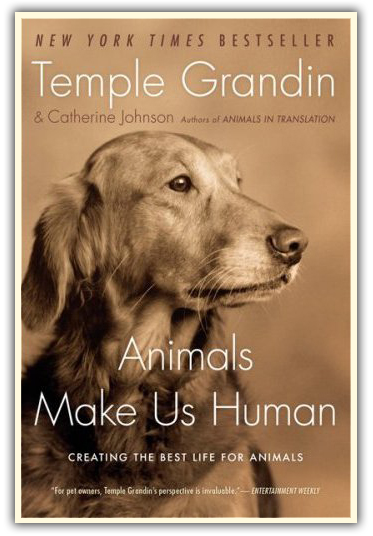
I apologize; reminiscing is fun, but only for those who are doing the remembering.  Enough about me and my past, what really matters is how will my background help my future students?  I think English teachers need to remember that everybody has different interests.  I know plenty of English majors and librarians who thrive off of non-fiction.  There are people everywhere who hate to read (like my brother, who claims the only book he's ever read is Charlie and the Chocolate Factory).  I think if you can figure out what the student's interests are and encourage them to pursue that, then that's what counts.  I went to the Temple Grandin lecture the other day, and she talked about how she loved to draw horses, so her mom encouraged her to do scholastic things with horses: drawing their heads, working on their corals, learning about their anatomy, doing math with feeding, etc.  Grandin told the audience that children with autism need to find their passion and then spread it out from there.   I think this applies to everybody-if a students loves fishing, then let them read books about fishing.  If they only like comics, allow them to read graphic novels.  If they prefer factual information, have them read scientific materials.  While there will always be a curriculum, I think that choice needs to be involved as much as possible.  I don't think we need to shut a student down just because they prefer graphic novels over a 200 page book.  Everybody has to start somewhere and work on building positive associations with reading.

A Tribute to My Brother


Even though this is non-fiction, I am going to make a
committed effort to read this book and
expand my own boundaries.


*Just a side note, it's note really like me to start a book and not finish it, but I think when I went through this P&P phase over the summer, I started and put down more books than I have ever done before.  It really made me wonder about the publishing companies that printed that low level of writing...

Friday, October 28, 2011

Digital Literacy

Today we live in a world where it is almost impossible to get by without some sort of technology.  While I don't personally own a smart phone, have a Facebook account, watch TV at home very often, or follow celebrity Tweets, a vast majority of my day is still spent glued to a computer or a phone.  This is especially true because of a) my job, and b) college.

Realistically, you cannot successfully go through college without using a computer.  Research, writing papers, communicating with instructors, setting up groups with peers-these are all mostly done online.  Likewise, I work in an office setting, converting textbooks into alternate formats for people with disabilities at the Disability Resource Center.  Since everything we do for that component of my job is done using technology, I am on a computer 90% of the time that I am there.

Besides work and school, I also use email as my main communication device.  I really hate it when people call me on my phone.  I vastly prefer that they email me, unless it's my mom, dad, or husband-I do make exceptions for close family!  I am constantly emailing friends and people for my agility club.  I don't have a lot of free time to play around online, but I do like to look at Yahoo to see the highlights of what is going on in the world and get also read random, useless trivia.   I do a blog for my Zoomdog agility club as well, so I'm often updating that.  I price shop, find apartments listings, extend my knowledge about dogs, and look up business information, all online. In fact, I had to have a root canal last week and needed a dentist to go to.  So, I looked online and my first judgement of the dentist office was their website-I figured if they didn't have a good website, how progressive was their dentistry practice?  This isn't always a good indicator, but I was desperate and needed to start narrowing down my options since there are a ton of dentists in Cache Valley.  What it comes down to, is that I rely on the internet and computers for everything.

The crazy thing is, is that I know there are kids out there who are 100 times more technology savvy than I am.  They sleep, eat, and breathe technology to a level that is even incomprehensible to me.  So, it is vital that technology plays an integral part in the classroom.  There are so many ways to use technology while teaching and learning.  I love enriching a lesson with a YouTube video or sound clip to meet multiple modalities.  I mentioned in a previous post the site LibraryThing, where students can have their own pages of information about books they've read and interact with others through reviews and other functions on the site.  Blogs, wikis, podcasts...these are all things that I can also incorporate into the classroom.  Additionally, using databases like EBSCO gives them quick access to critical articlees that they can use in persuasive and/or research papers.  If the students don't know how to use a certain technology, I can create an Instructional Architect page for them, do a video, or simply walk them through it face to face.

Teaching without technology is like baking bread without the yeast.  Sure, it will work, but it won't help the end product (the students) rise to their full potential.

Thursday, October 27, 2011

LibraryThing

This isn't an official post, but I was excited because I was able to put a LibraryThing widget on the sidebar of this blog.  I've had a LibraryThing account for a year or two (I created it for my minor, School Library Media) and have been trying to keep it current.  I include books I've read for school and other projects, and books I've read for recreation.  Honestly, I love looking at all the covers and remembering what I've read.  I think LibraryThing, or something comparable like Shelfari, would be a great site for students to use.  Besides looking at all the pretty covers-they can also write reviews of the books, check out other people's comments, get recommendations, create tags, and so much more.

Friday, October 14, 2011

Home: Where It All Begins

I love a good story-wondering what's about to happen, contemplating characters, exploring possibilities that wouldn't normally exists for me.  From the very beginning, my parents cultivated this interest in me.  My mom is a kindergarten teacher and knew the importance of reading while we were growing up, so we had a ton of picture books to choose from.  Being the youngest in my family, I had a large group of people who would read to me if I asked them.  But more than any of them, my dad was the best.  He would read to me whenever I asked, even if he would struggle after a long day to stay awake while doing it!  One of my favorite things that my dad did though, was to make up stories for me.  My dad and I both love Chip and Dale.  So, before big days, my dad would tell me a story about Chip and Dale doing exactly what I would be doing the next day, whether is was going to an amusement park or attending my first day of school.

They weren't the most literary stories-but they were unique, and created especially for me.  There are still nights where I am restless, either from nerves or excitement, and when I almost begin telling myself my own Chip and Dale story.


This positive experience with reading and stories has carried with me.  My desire to read, at times, is insatiable.  I just have to know what happens next and I can read for hours on end.  My husband knows not to bother me while reading and has even gotten into the habit of making dinner for us if I my nose is stuck in a book (I guess he finally realized that was the only way he'd be eating before 11 pm). 

In high school, I had some great teachers who made reading even better by giving me the tools to think about it in different ways and/or understand it on a deeper level.  Although writing for me can be stressful, I have never regretted my choice to do English Education.  I think this base love for literature is what will keep me motivated through the years that I am teaching.  Although I realize that I will not be teaching a literature-based curriculum, instead focusing on skills, I can still use great literature to teach those skills and hopefully connect to students.

I think thoughtfully selected literature can connect to students with a variety of backgrounds.  While they may not understand a community that's been molded into a false sense of perfection, as in The Giver, they can relate to questioning the norms of society or finding out that parents aren't always what they appeared to be while growing up.  Looking at main ideas or themes in a book and relating them to everyday life or a current event can be a great way to activate students' background knowledge about that particular topic.  Beyond reading, learning to write and speak articulately, analyzing, and looking at something from different viewpoints are also helpful skills learned in English, many of which can be tied to a good story or text.

While I realize that not ever student likes to read and didn't have the positive experiences I did with this area while growing up, I hope that I can take my love for literature and pass it along to my students, even if it's just a sliver.

Friday, October 7, 2011

Responding to Student's Writing

Admittedly, in grade school I was a very good student.  I caused very little trouble and always did well on my assignments.  I have always loved reading-it's been one of my passions ever since I can remember.  I love stories and over the years, I have come to appreciate the craft and skill behind a well-written piece.  With this love and my student skills you would naturally think that English was one of my favorite subjects, but I never considered it so because of the writing aspect that Language Arts obviously involves.  I wasn't a terrible writer and never had a horror story like Ali's where the teacher ripped off a page and threw it in the trash (or even worse, like our teacher's story-even thinking about that makes me shudder).  The worst feedback I experienced was no feedback at all.  I would get minimal comments on the top of my page, nothing for me to correct and revise throughout, and was simply awarded an A.  I always wondered what my teacher really thought-did they read my work, decide it was relatively good, and just give me an A?  Did they think it could have been reworked, but it wasn't worth their time to really grade it since I was in the top 10 percent of the class?  Or worse, did they read it at all, or did they just think, "Becca is a great student, does quality work, I'm going to skim this and give her an A"?  None of these scenarios makes me feel really valued as a student.

In fact, when deciding on a major in college, I was very interested in doing English, but was scared of writing.  I never knew what kind of writing skills I possessed.  I was never encouraged in high school to improve my writing in any way, never given any pointers, never told what was good.  It wasn't until I was unhappily pursuing a major in Nursing (after a career counselor told me I didn't have the 'personnality' to be a teacher, which is what I wanted to do in the first place, and that I had better do something that better matched my aptitude personality test) that I decided I needed to change to something I actually enjoyed. Having toyed with the idea in the past, I thought of teaching, and if there was one thing I loved, it was literature.  But that pesky aspect of writing just seemed to ruin all my plans.  Needless to say, I decided to just go for it and have been (mostly) happily trudging along since. 

The thing that I have loved about college is the feedback I receive.  I actually had teachers who would comment on my writing!  My first 'real' English class was taught by an instructor who was in her first semester of teaching.  She took each one of our papers and wrote a full, single-spaced page in response.  While this was sometimes intimidating, she actually took the time to comment on our writing, letting us know what went well and what didn't.  I realized that though criticism can be tough to receive, it's better than getting no feedback at all.  From this experience, I feel like when teachers didn't take the time to help me improve my writing, they didn't care about my progression as a student.  When they did take time to make applicable comments, it made me feel much more validated.

As a future English teacher, my goal is always to help students improve, no matter what level they are on.  While core standards, state and national testing, and other outside factors will always be breathing down my neck, I hope to be able to reach students on an individual basis.  One way I can do this is through honestly responding to their writing.  I don't need to be mean, hypercritical, or even write a one page response to everything they compose, but I can give them positive feedback and suggestions on ways they can improve and let them know the areas where they excel.